

From Kotor to Ulcinj: Four Days by Sea Kayak
I’ve always loved October. Apart from revealing the full diversity of the nature around us, October
means freedom to me. After a busy, but beautiful, summer season, it’s the time of year when I can finally choose what to do with my days again. A time to turn some of my ideas into reality.
This October, I chose a sea kayaking expedition along the coast of Montenegro. From the Old Town of Kotor, part of a UNESCO World Heritage Site, to the Old Town of Ulcinj.
I consider exploring a country’s coastline by kayak a privilege. Especially when that country is my
homeland.
Montenegro has one of the shortest, yet most beautiful coastlines in Europe. The contrast between the mountains and the sea, stretching from the Bay of Kotor all the way to the long sandy beaches of Ulcinj, is what makes this coast so special. It’s also a place where different cultures, traditions and centuries of history come together.
Day One: From Kotor to Arza
The first rays of sunlight reflect off the walls of Kotor’s Old Town, in front of which, unfortunately, a cruise ship is moored. The morning sun warms our faces as the ten of us prepare our kayaks,
determined to set off on what we hope will be the adventure of the year, travelling in one of the
oldest types of watercraft in the world.
The youngest member of our group is my son, Danilo. This will be his first sea kayaking trip, and he’s bursting with excitement. He can hardly wait for everyone to get on the water.
Ahead of us are around 30 kilometres of paddling to Arza Fortress, opposite Mamula Island, at the entrance to the bay.
What makes this first day so special is the spectacular view of the mountains surrounding us. Against their enormous presence, even the sea seems small. And at the foot of those mountains sits a town with Venetian architecture, enclosed by ancient walls, yet somehow warm and welcoming.
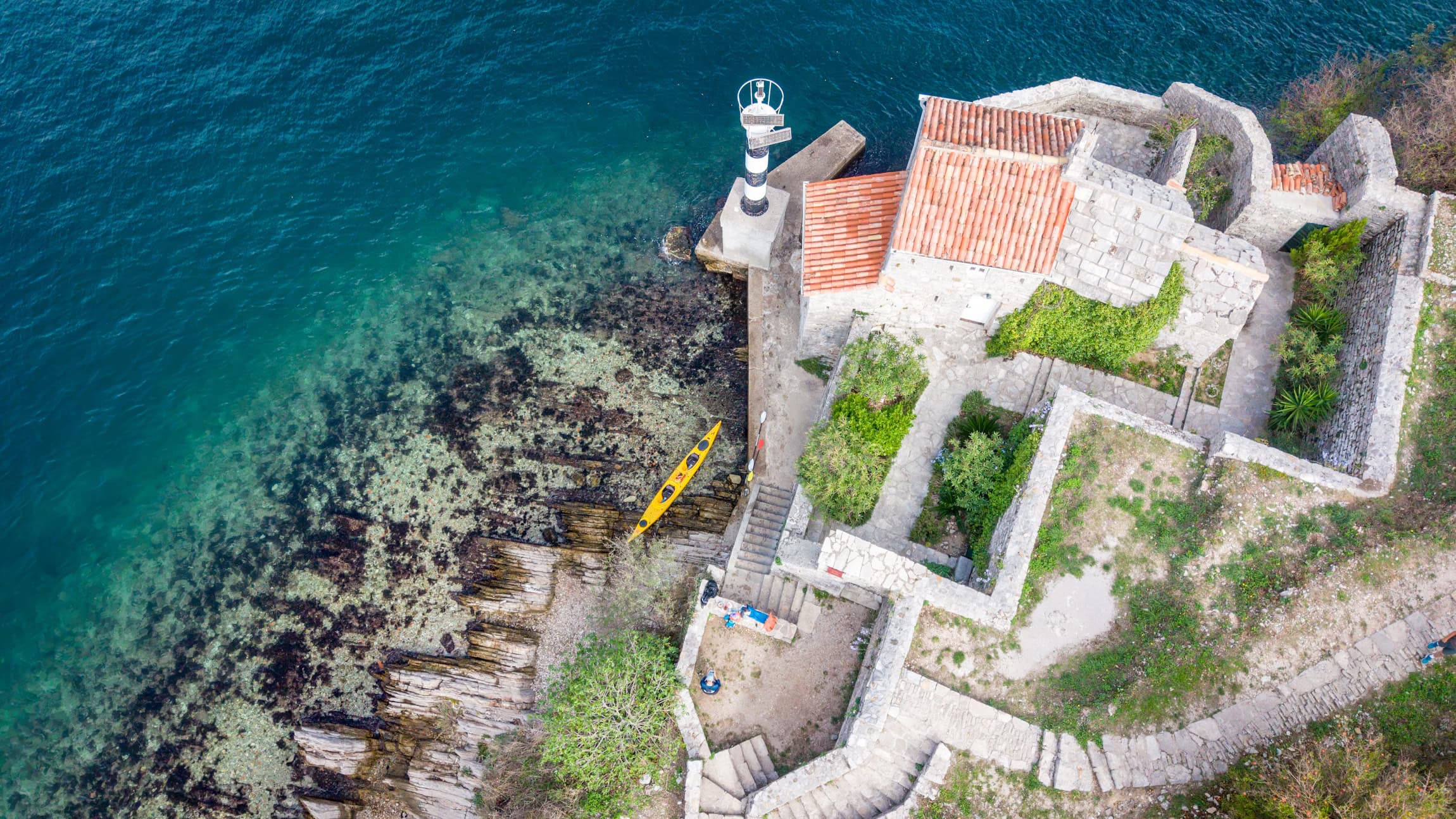
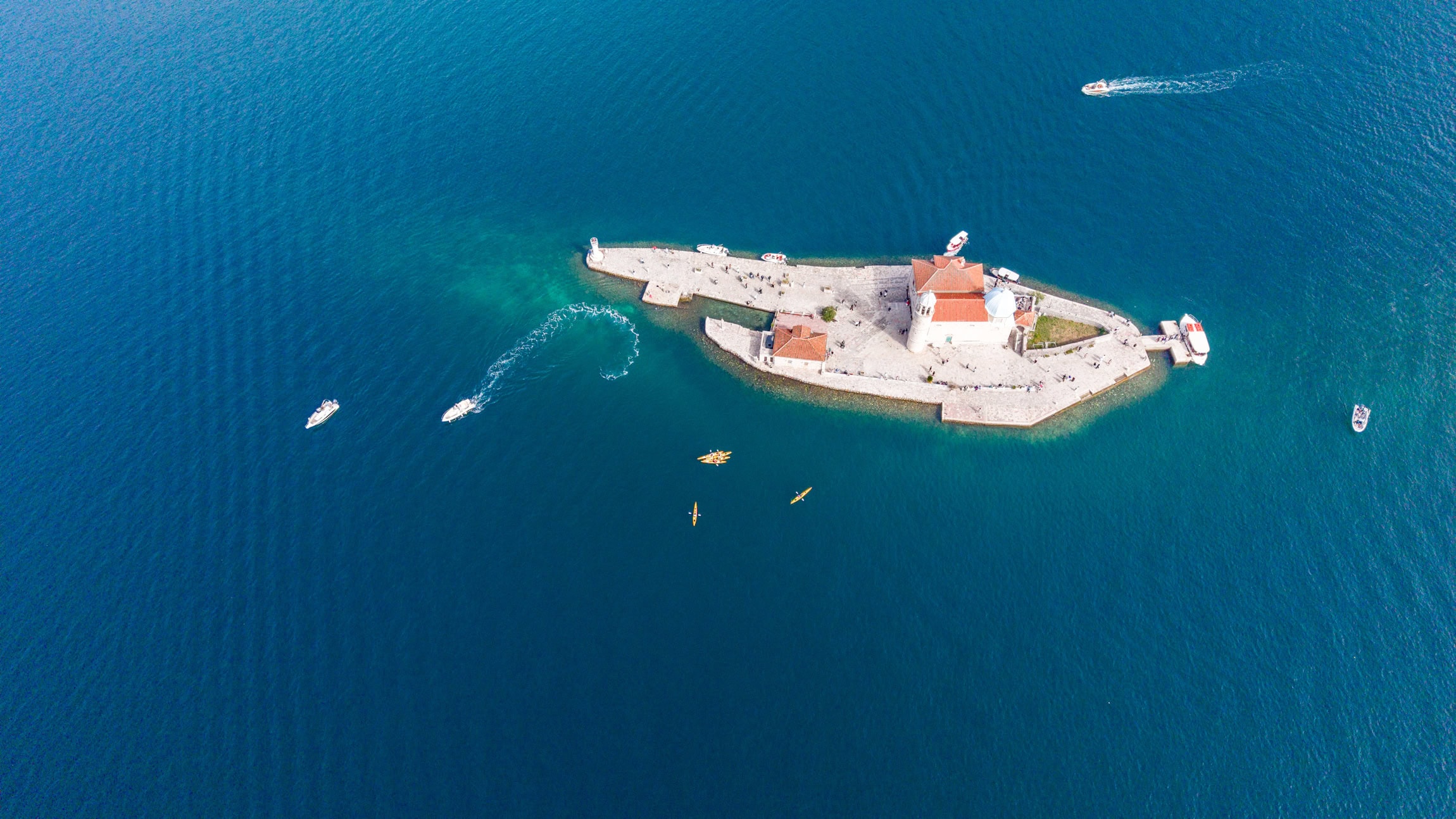
We paddle along the shore towards Our Lady of the Rocks, an artificial island that people have built up over centuries by dropping stones into the sea. According to legend, an icon of the Virgin Mary was discovered at this spot. Even today, during the traditional Fašinada ceremony held every 22 July, locals bring stones by boat and throw them into the water around the island, continuing a centuries-old tradition.
We cross the bay from Portonovi towards Rose, paddling past old military installations and tunnels from the Yugoslav era, once used as shelters for vessels of the Yugoslav Navy.
For Danilo, it’s especially important that we enter every tunnel, imitate the sounds of seagulls and
listen to the echoes.
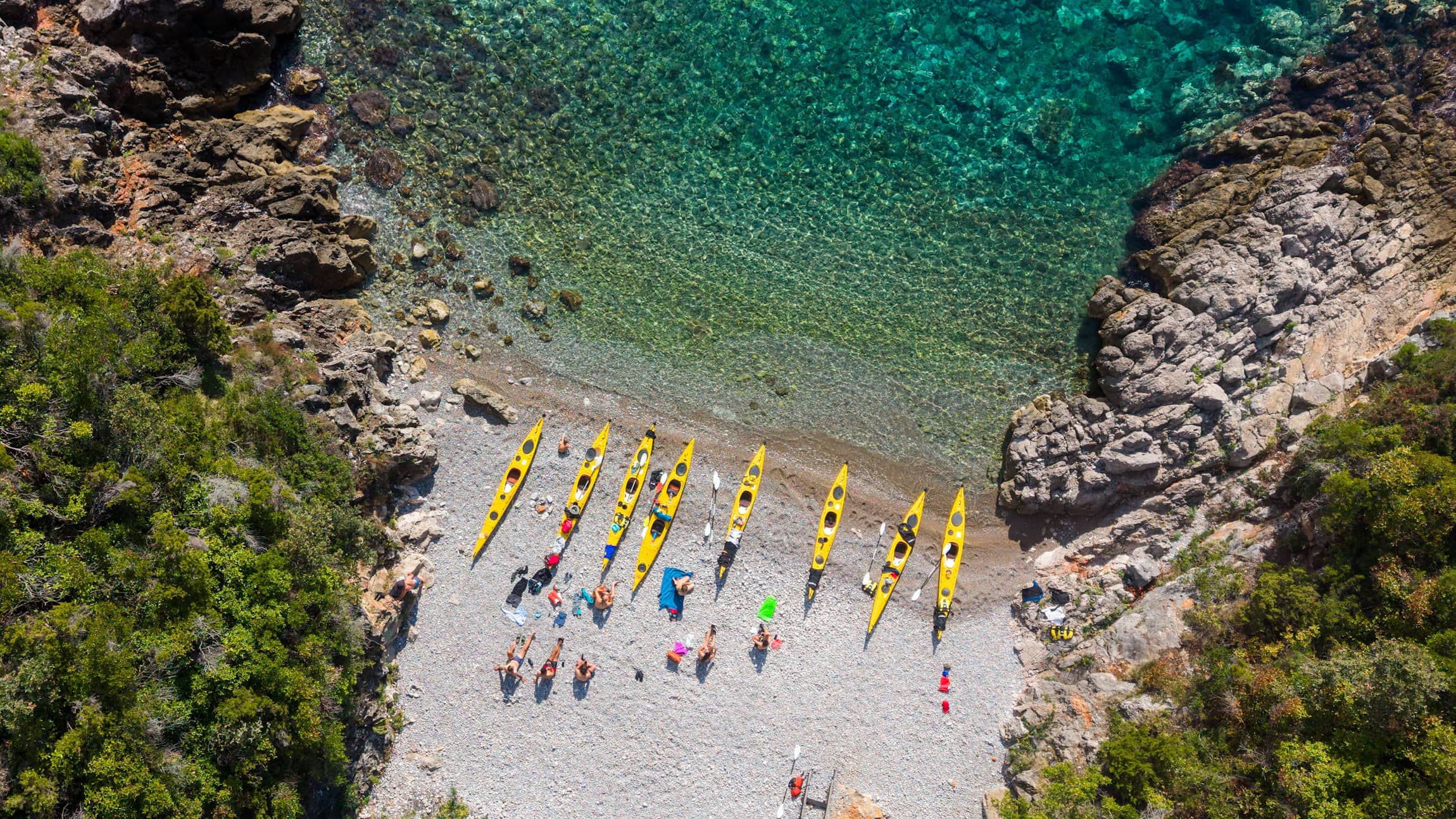
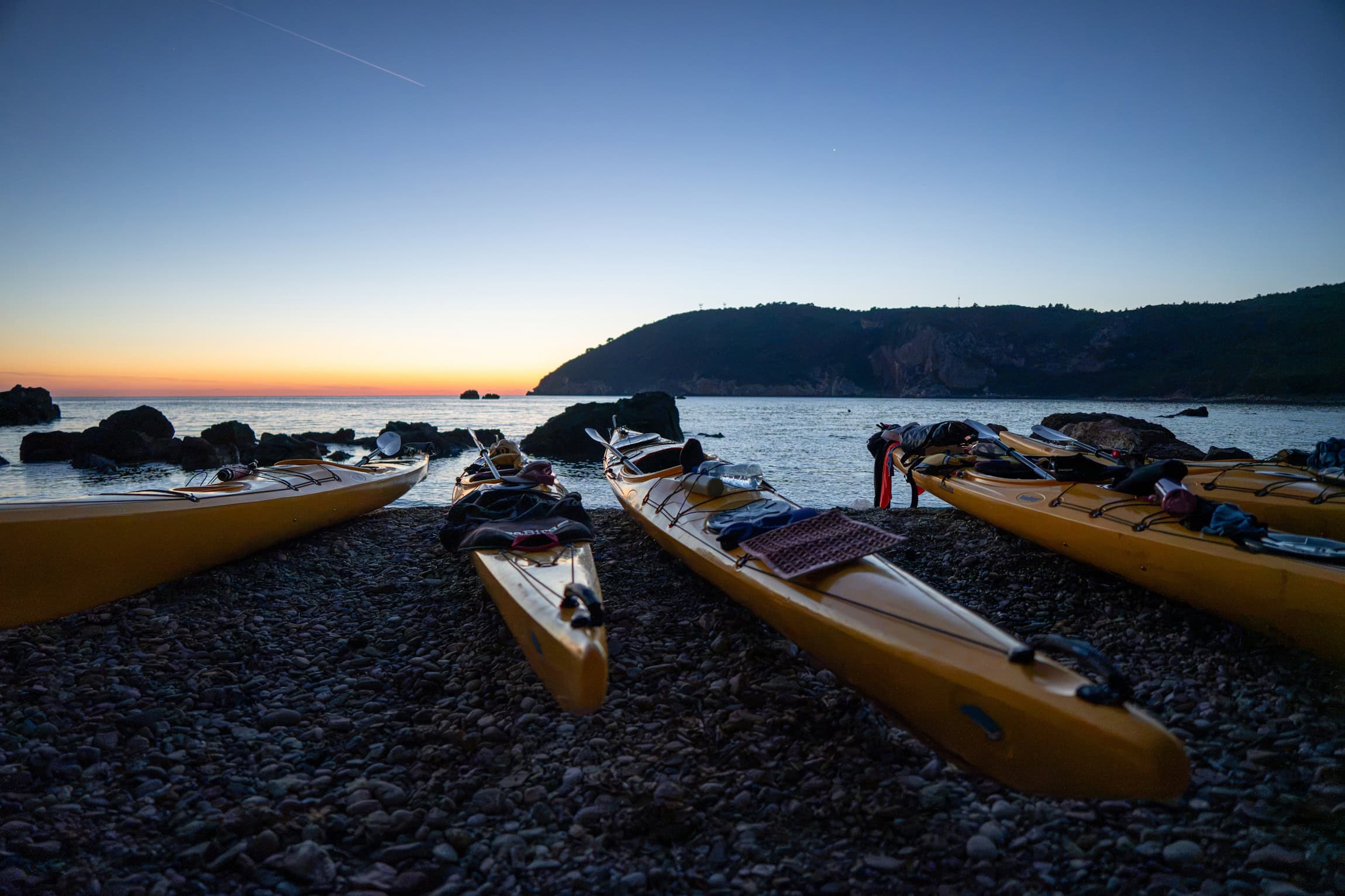
Just as the sun begins to set behind Mamula Island, we paddle onto the beach beneath Arza Fortress, built during the Austro-Hungarian period. This is where we spend our first night.
It’s fascinating to explore the history of your own country and realise that this adventure is, in a way, a journey from Venice to Austria-Hungary, through Yugoslavia.
And we’ve only just begun.
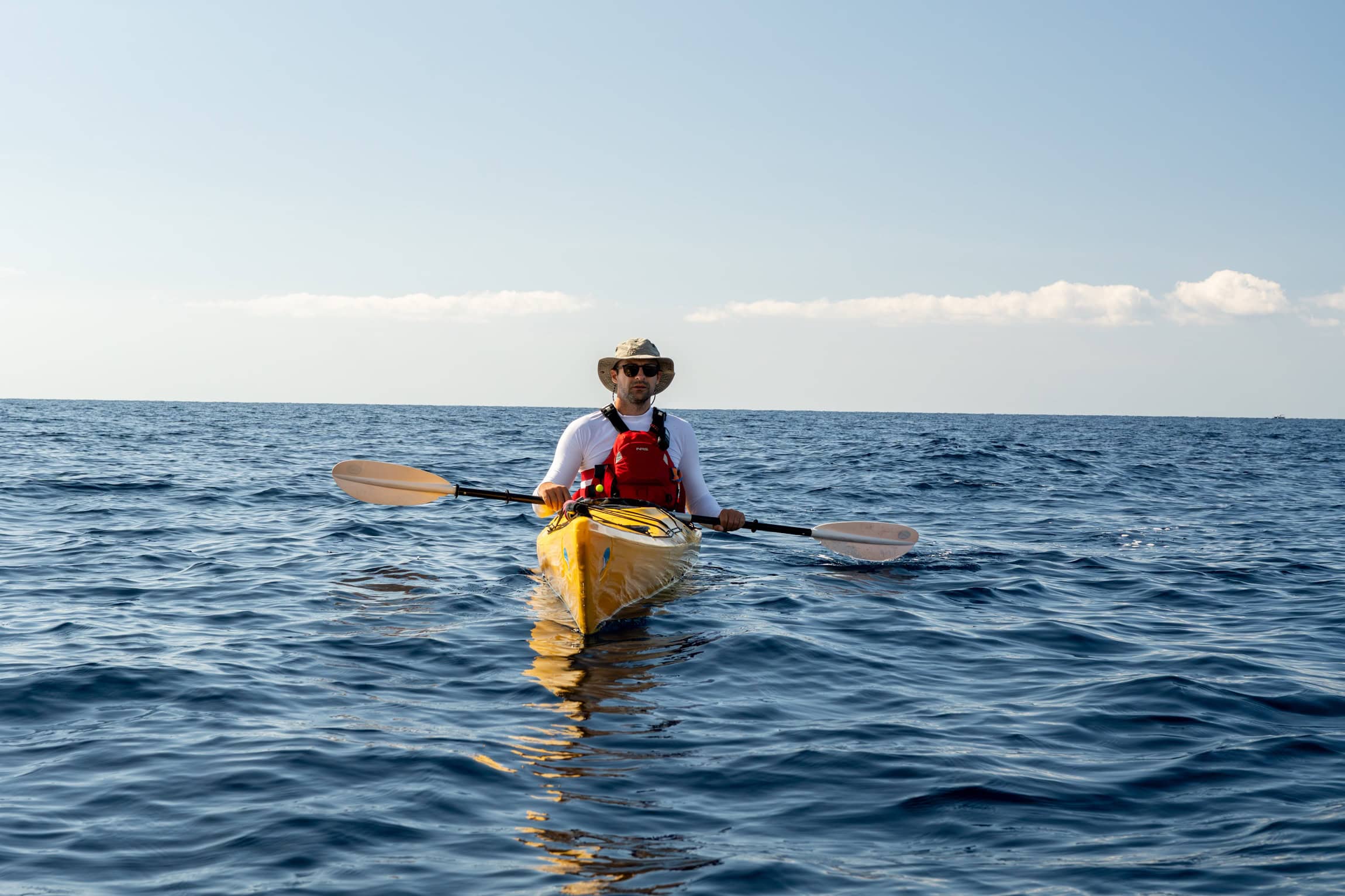
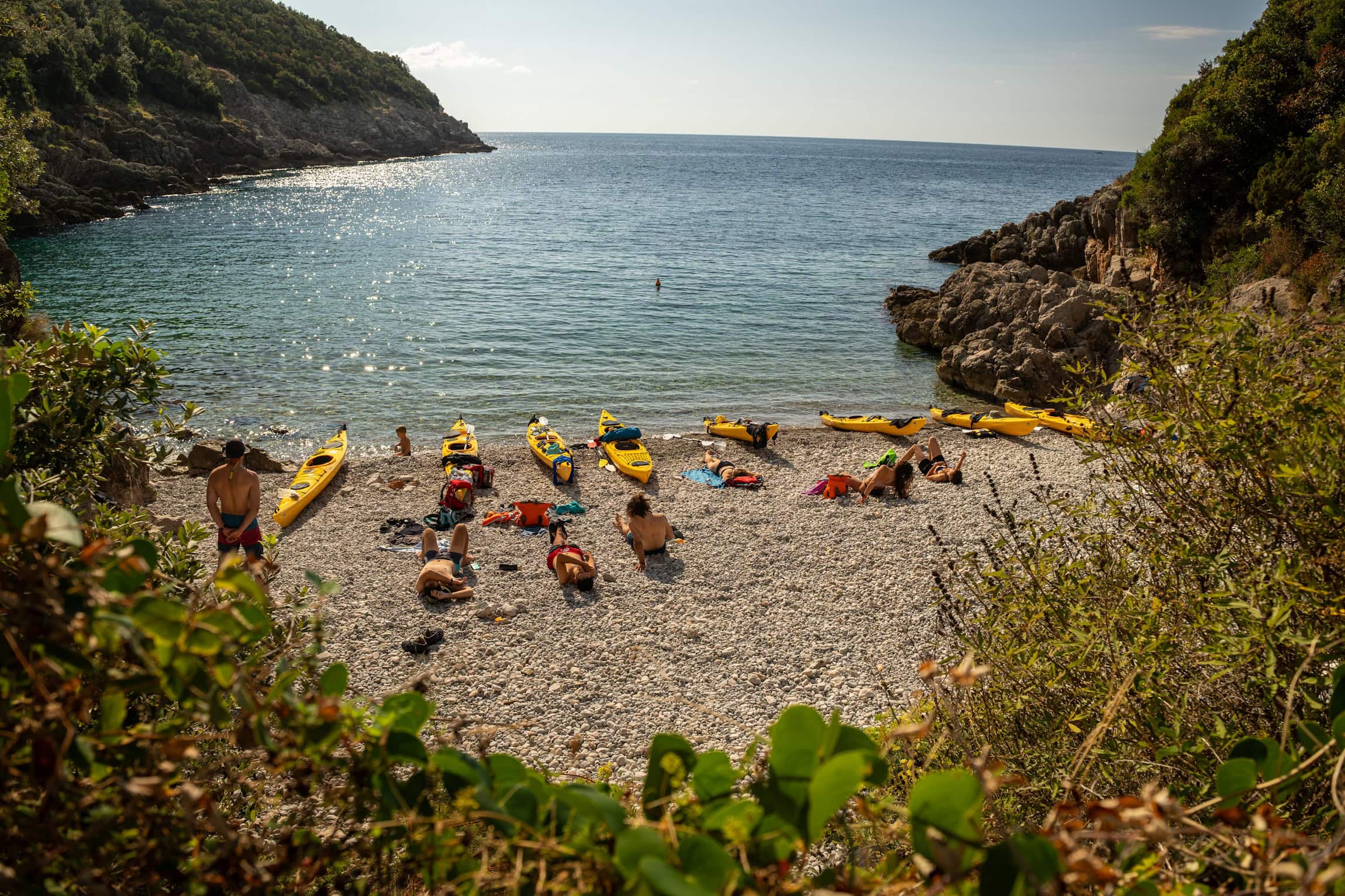
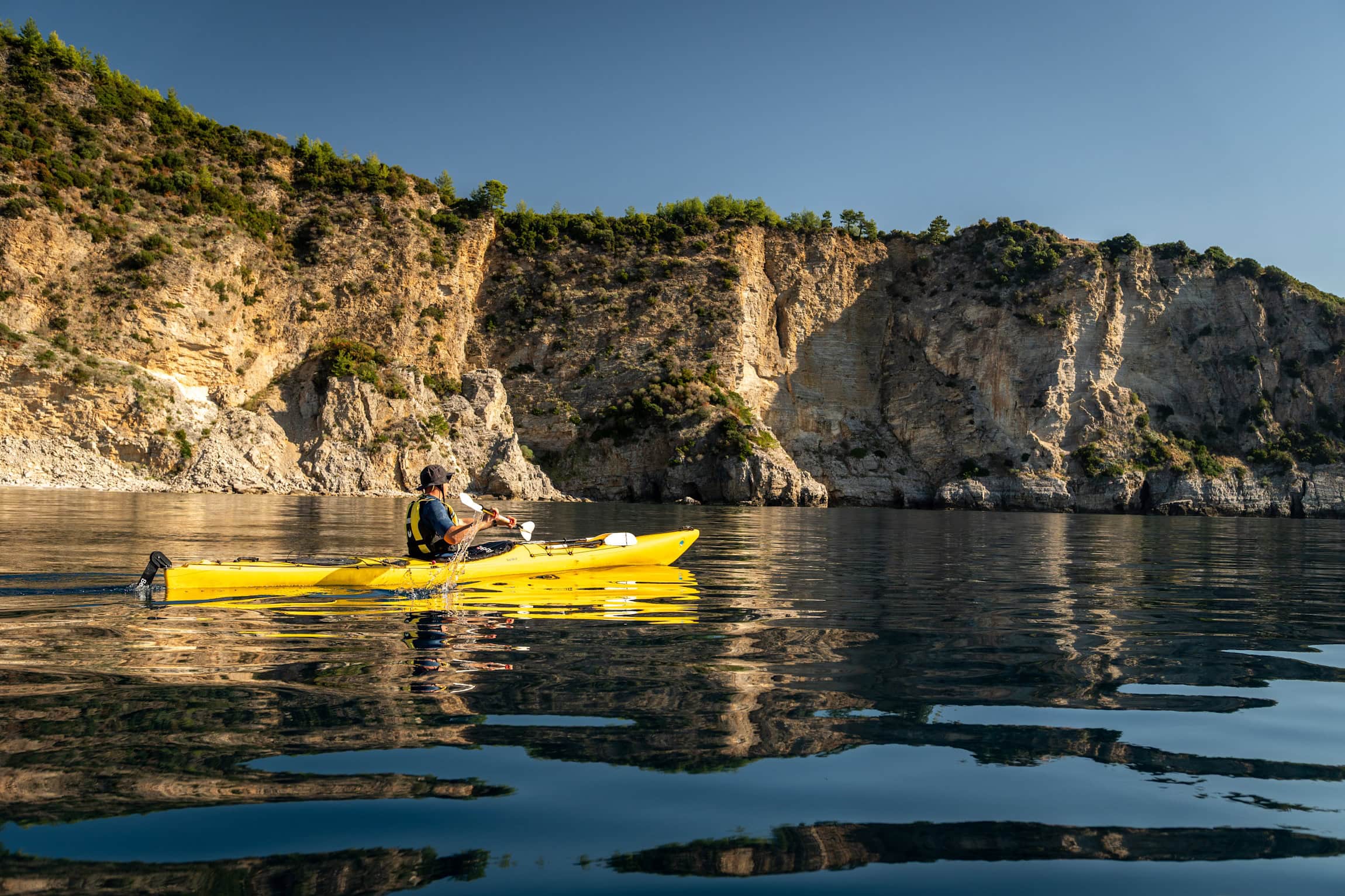
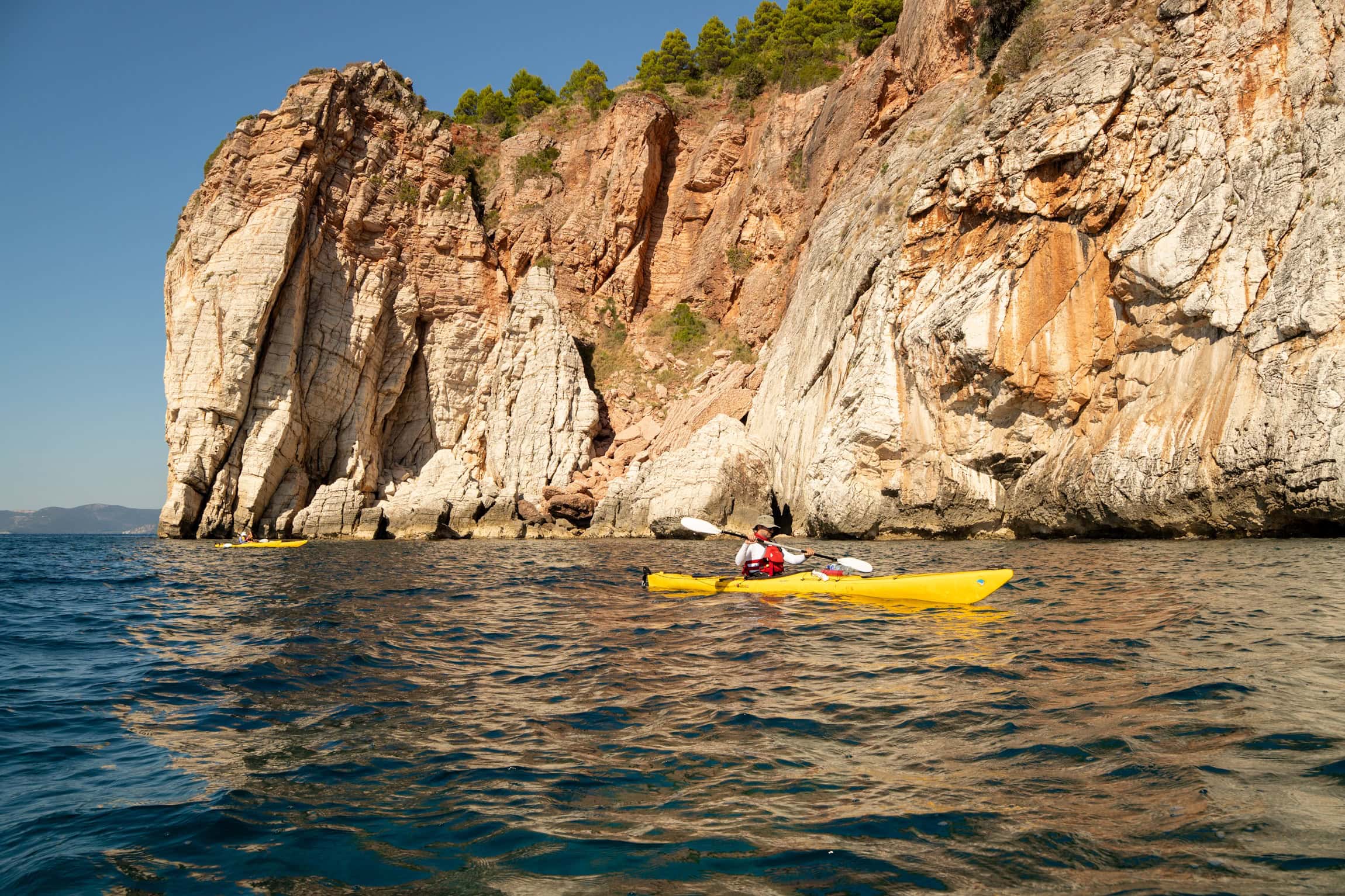
Day Two: Luštica and the Open Sea
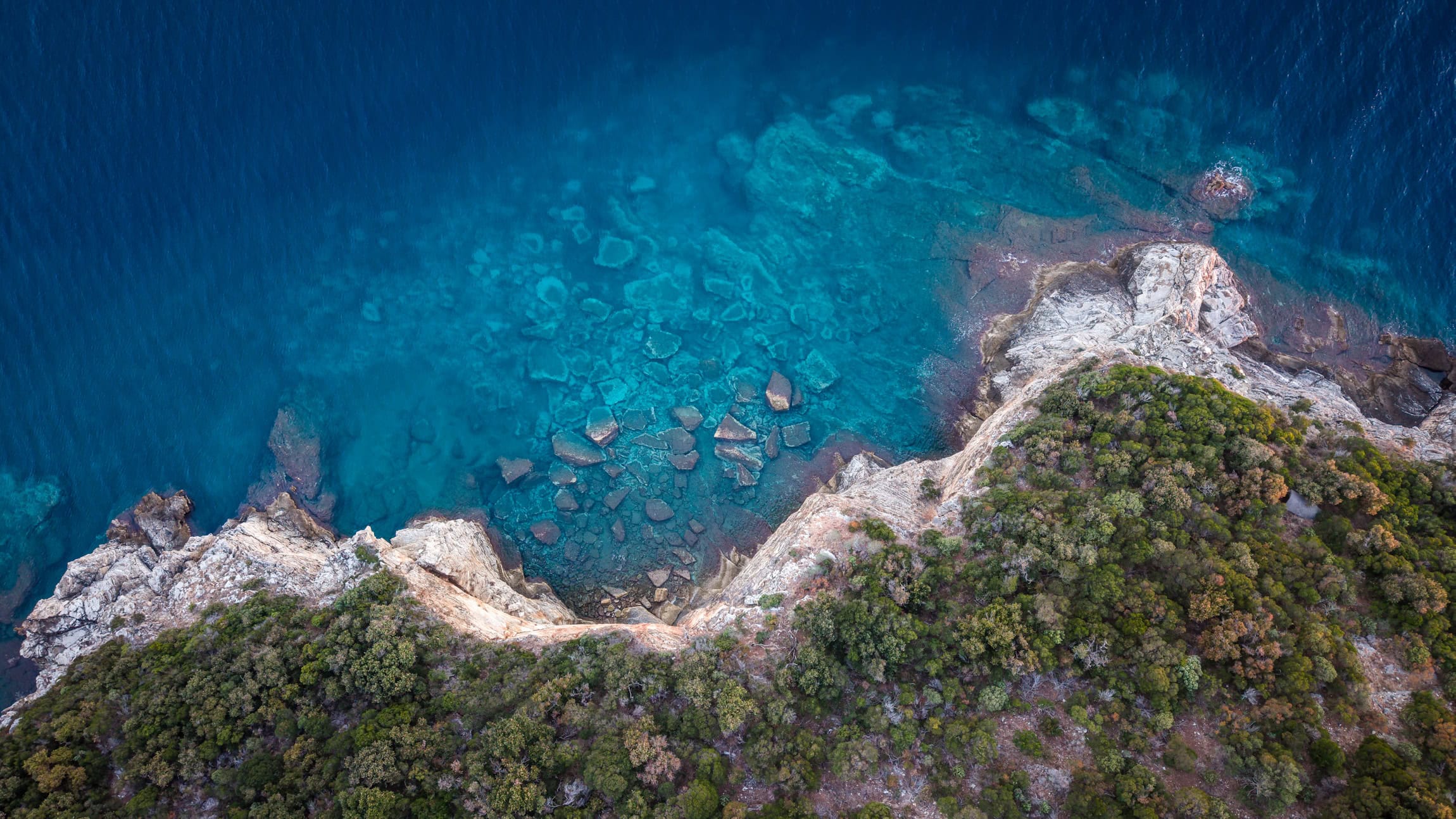
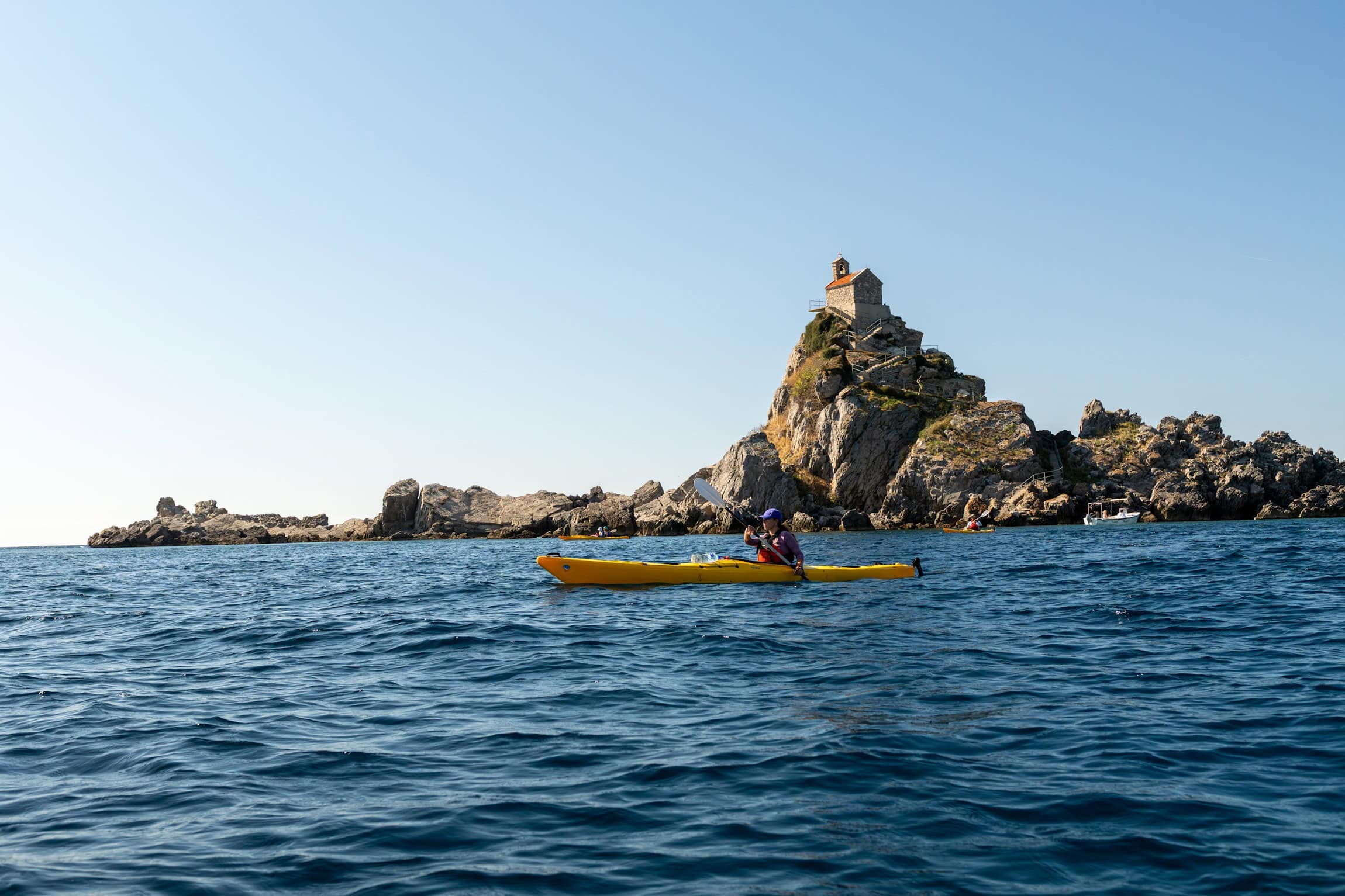
On the second day, we’re faced with the beautiful contrast between the cliffs of the Luštica Peninsula and the open sea.
How small those rocks really are compared with the vastness of the water surrounding them,
relentlessly battering them every day, yet shaping them so beautifully at the same time.
Hidden along the peninsula, abandoned and weathered, Austro-Hungarian fortresses and tunnels
continue to resist the passage of time and the power of the sea. A maze of human history left behind.
In contrast stands the modern development of Luštica Bay, which, in its own way, brings back
something of the Venetian spirit.
But nature still dominates.
Small hidden coves, the Blue Cave and several smaller sea caves stand out as particularly beautiful stretches of coastline.
And then, suddenly, everything seems to fall silent.
No more boats. Not another person on the horizon.
The perfect time for a nap. At least for Danilo.
By the second day, it was clear that he had mastered the art of sleeping in a kayak. While the rest of us were counting kilometres and paddle strokes, he slept peacefully, as if it were the most natural thing in the world.
After 28 kilometres, we arrive at Jaz Beach.
Spirits are high. Everyone seems motivated, even though these distances aren’t exactly easy for
those who don’t spend much time in a kayak.
And the people you paddle with are an incredibly important part of any journey.
One of the most interesting contrasts of sea kayaking is that, although you’re travelling on an
expedition with a group, these long distances give you an enormous amount of time alone with your own thoughts.
And that goes on for thousands of paddle strokes.
Not everyone deals with it in the same way. Modern life surrounds us with so much stimulation,
leaving so little room for simply doing nothing.
Unfortunately.
Day Three: From Jaz to Maljevik
After a cold and damp night, despite the fire we’d kept burning, we decide to get as close to Ulcinj as possible.
The weather is beginning to change, and we want to divide the remaining sixty or so kilometres into two roughly equal stages. So instead of finishing the day at Buljarica, we decide to take a longer break there and continue to Maljevik.
What I remember most from that morning is the sea and the spectacular view of Budva’s Old Town, appearing shyly from behind the rocks.
The perspective from a kayak is beautiful.
Budva, one of the oldest towns on the Adriatic, was badly damaged by an earthquake and later
rebuilt. Its walls and architecture still carry the character of the Venetian Republic.
We continue past Sveti Nikola Island, popularly known as Hawaii.
Unfortunately, excessive urban development has made the view of modern Budva considerably less pleasant.
We paddle past the little Church of Saint Nedjelja, which decorates the entrance to Petrovac. There are several stories about how the church came to be built, but I won’t go into them this time.
We stop at Buljarica for a break.
Besides being one of the few relatively preserved long beaches along this part of the coast, Buljarica is also an important natural habitat for many animal species, particularly birds.
As a rule, paddling somehow feels easier after a long break.
And so, after almost two hours of rest at Buljarica, it takes us less than another two hours to reach Maljevik Bay and the beach known as Mali Maljevik.
It’s as if the place has been left just for us.
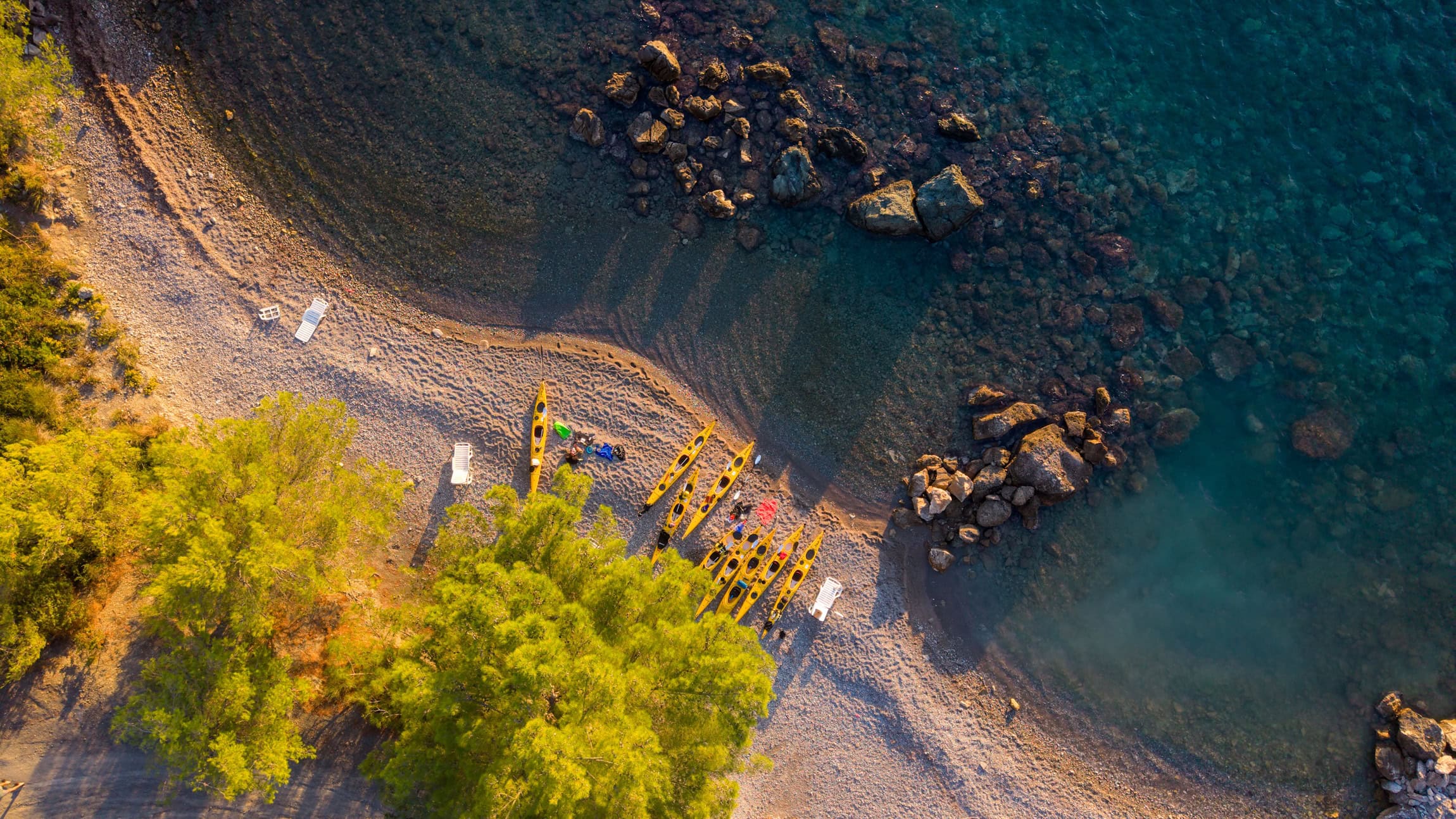
There’s nobody on the beach. A perfect place to watch the sunset and camp before the final stage.
I’d go as far as to say this was the most beautiful night of the entire journey. Certainly our warmest and most enjoyable campsite.
We sat up late, sharing impressions and talking about the day ahead.
Pava and I secretly came up with a plan to paddle a long stretch of around twenty kilometres the
following day without landing, then continue all the way to Ulcinj. Maybe even to Ada.
Day Four: Towards Ulcinj
An early start and calm seas promise a beautiful beginning to the day.
Still, a southeasterly wind has been forecast, and we know it will slow us down later.
We leave Maljevik at around 9:30 in the morning.
Each of us in our own world, yet all of us together.
We cross the Bay of Bar and paddle towards the headland separating the port of Bar from the open coastline. Although it doesn’t look particularly far away, it takes us more than an hour to get around the bay and continue.
This part of the coast isn’t especially interesting because of the settlements and port facilities, but
the crossing itself is certainly an experience.
We split into smaller groups, and soon everyone continues along their own line, at their own pace, with their own thoughts, on what turns out to be a four-hour paddle to Valdanos.
By the time we stop for a break, everyone is a little battered.
But somehow the energy doesn’t disappear. Quite the opposite. We laugh and joke about all the
advantages and disadvantages of sea kayaking.
We decide to take a long break, enjoy the sunshine and perhaps have one last swim in our sea before the season ends.
The plan is to reach Ulcinj at dusk.
And it turns out to be a wonderful plan.
The coastline from Kruče towards Ulcinj is magical. Wild, yet inviting.
A handful of shallow coves, cracks in the rocks, forests reaching down towards the shore and calm water define the final part of our expedition.
While some of the group take the opportunity to climb the rocks hanging above the water, because of course they’ve brought their climbing shoes, Danilo and I slowly approach Ulcinj.
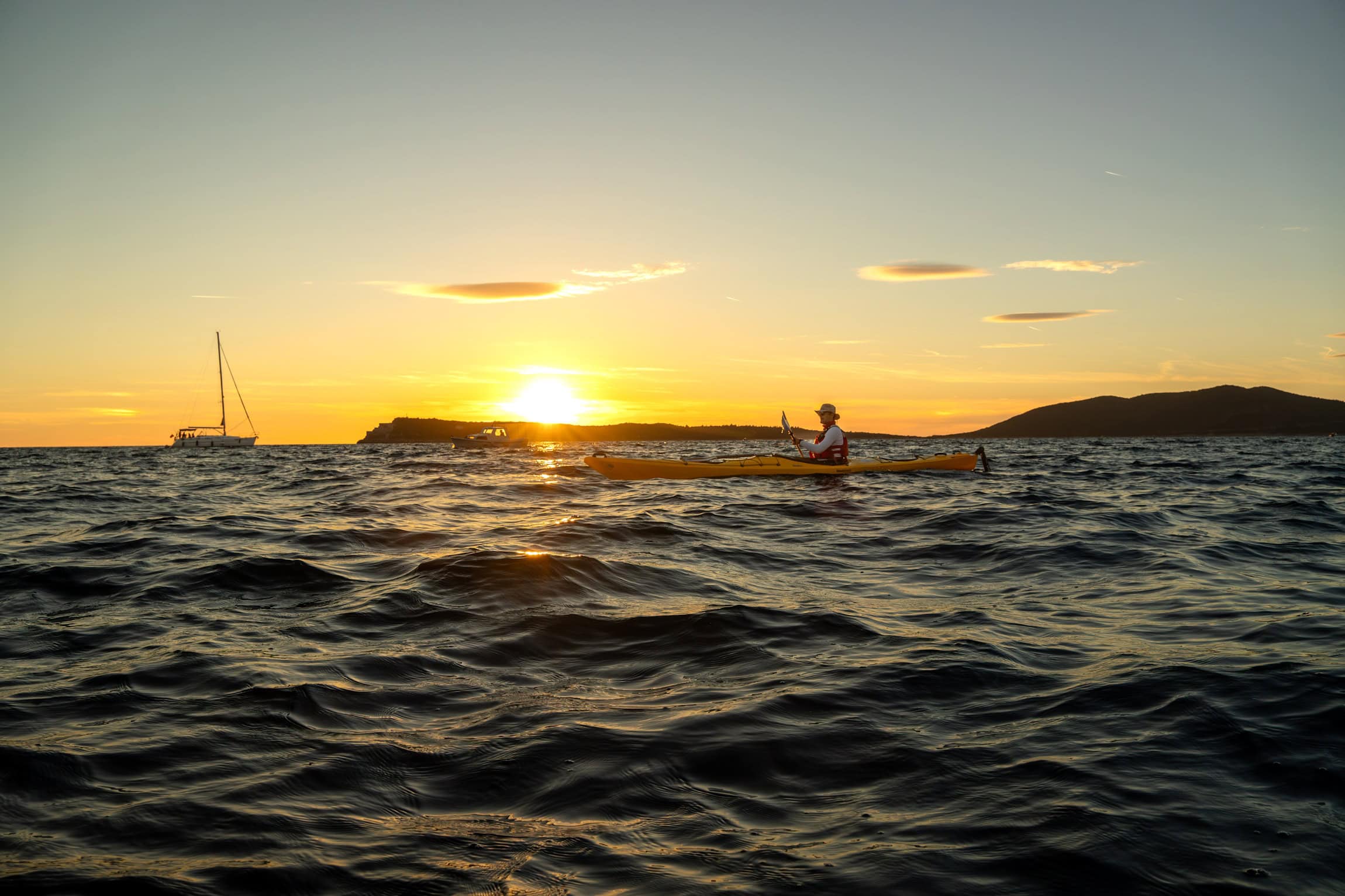
The sun is setting.
Seeing Ulcinj from the sea, from a kayak, takes me five hundred years back in time.
I see and experience this town in a truly special way, unlike anything I’ve known before.
It looks so beautiful, firmly enclosed by its walls, yet somehow inviting us in.
The sun is disappearing beyond the horizon when the call to prayer rises from a minaret standing just beside the walls of the Old Town.
I get goosebumps.
It’s one of those special moments that only some higher power could create.
We did what we’d set out to do.
We paddled from Kotor to Ulcinj.
From Venice to the Ottoman Empire.
And we never left our beautiful Montenegro.
Four days. Almost 120 kilometres.
And moments we’ll never forget.


